11/18/2026
Why people born after 2000 have so many empty cells in the Pythagorean square
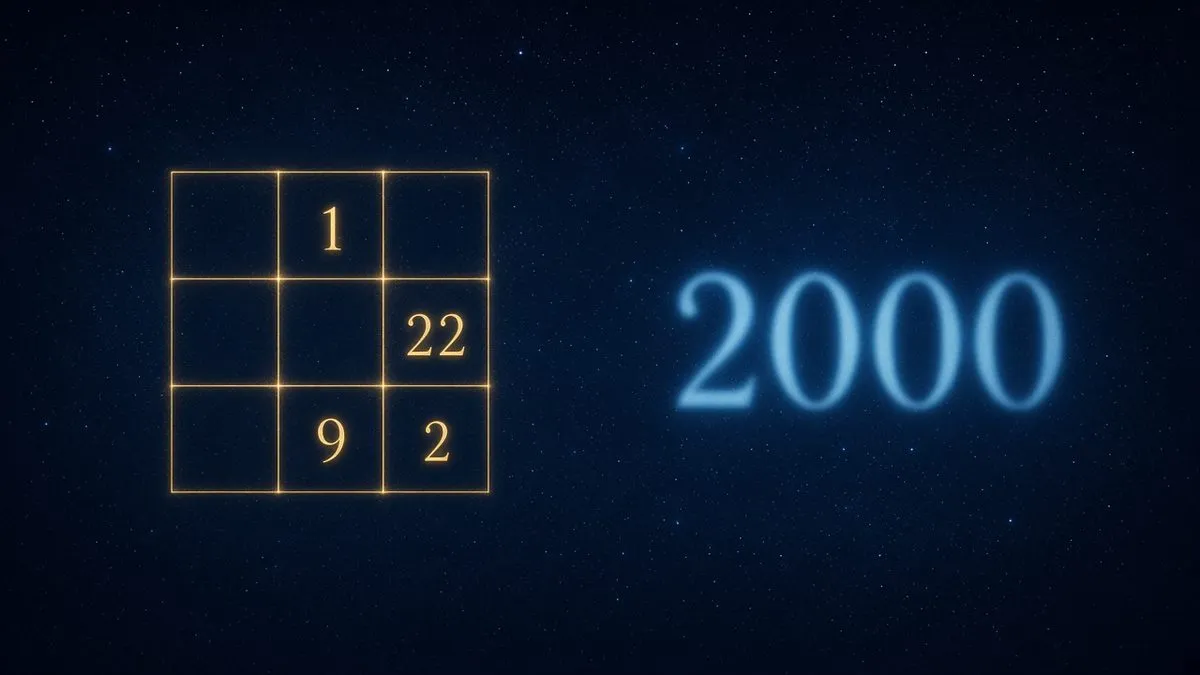
The most common support message looks like this: "I calculated my child's square and half of the cells are empty. Is that a bug?" No, it is not. That is simply how the arithmetic of 21st-century dates works.
Where the empty cells come from
The square is filled with the digits of the date and of four working numbers. Zeros count toward the sums but have no cell of their own. The year 2005 has two zeros, 2017 has one, and the digit sum of such a date is usually below twenty, so the working numbers are short and add few digits. As a result a date from the 2000s puts 9-11 digits into the grid versus 12-14 for someone born in the 1970s-1990s. An empty 5, an empty 7, an empty 6 - for these dates that is normal, not a "weak square".
How to read it
An empty cell does not mean "no trait". It means the theme was not handed out in the starting set and will be built over life - through habits, people and circumstances. For a child this matters most: empty cells must not be read as a diagnosis, but they can be read as a hint about where support is needed.
We have two guides on this topic (in Russian):
- Pythagorean square for people born after 2000 - what zeros do, how to count the working numbers, and four dates from 2001 to 2015 worked through.
- A child's psychomatrix - a parent's reading of the square, without labels.
Check it yourself
Open the calculator, enter your child's date and compare it with your own: the difference in the number of digits is visible at once. If you want to see why, the working numbers W1-W4 are shown right under the grid.